Few drinks in the world carry the same sense of tradition and craftsmanship as whisky. From the misty Highlands of Scotland to the rolling hills of Kentucky and the precision-driven distilleries of Japan, whisky has become a global symbol of patience, heritage, and flavor.
Yet despite its popularity, many people don’t fully understand how whisky is made. What transforms simple grains into a complex spirit filled with notes of caramel, smoke, spice, fruit, or vanilla? The answer lies in a production process that combines agriculture, chemistry, engineering, and years of aging.
Unlike many modern products designed for speed and efficiency, whisky is built around time. Some bottles spend over a decade maturing in oak barrels before they are considered ready to drink. Every stage — from selecting grains to bottling the final spirit — influences the whisky’s character.
In this guide, we’ll explore the complete whisky-making process step by step and discover how distillers turn grain, water, and yeast into one of the world’s most celebrated spirits.
The Main Ingredients
Although whisky styles vary around the world, the foundation of whisky production remains surprisingly simple. Most whiskies are made from just three main ingredients:
- Grain
- Water
- Yeast
However, the quality and type of these ingredients can dramatically affect the final flavor.
Grains
Grains are the backbone of whisky production because they provide the starches needed to create alcohol.
Different whisky styles use different grain recipes, often called mash bills.
Barley
Barley is especially important in Scotch whisky production. Malted barley produces rich, nutty, and cereal-like flavors that form the signature taste of many single malts.
Corn
Corn is heavily used in bourbon production and gives whisky a sweeter, fuller body with notes of caramel and vanilla.
Rye
Rye creates a bolder and spicier whisky. Rye whiskies often feature peppery or herbal characteristics.
Wheat
Wheat produces a softer and smoother spirit with a lighter mouthfeel.
Distillers carefully balance these grains depending on the flavor profile they want to achieve.
Water
Water is used throughout nearly every stage of whisky production.
It is involved in:
- Soaking grain during malting
- Mashing the grains
- Cooling equipment
- Reducing alcohol strength before bottling
Many famous distilleries are built near natural springs or rivers because water quality is considered extremely important.
Some whisky enthusiasts believe local water contributes to a distillery’s unique identity, although the impact is often debated among experts.
Yeast
Yeast may seem like a small ingredient, but it performs one of the most important tasks in whisky production: creating alcohol.
During fermentation, yeast consumes sugars and produces:
- Alcohol
- Carbon dioxide
- Flavor compounds
Different yeast strains can influence fruity, floral, or spicy notes in the final spirit.
In recent years, some distilleries have started experimenting with specialty yeast strains to create more distinctive flavor profiles.
Step 1: Malting
Before alcohol can be produced, the starch inside the grain must be converted into sugar. This is where malting begins.
Malting mainly applies to barley and involves three major stages:
- Soaking
- Germination
- Drying
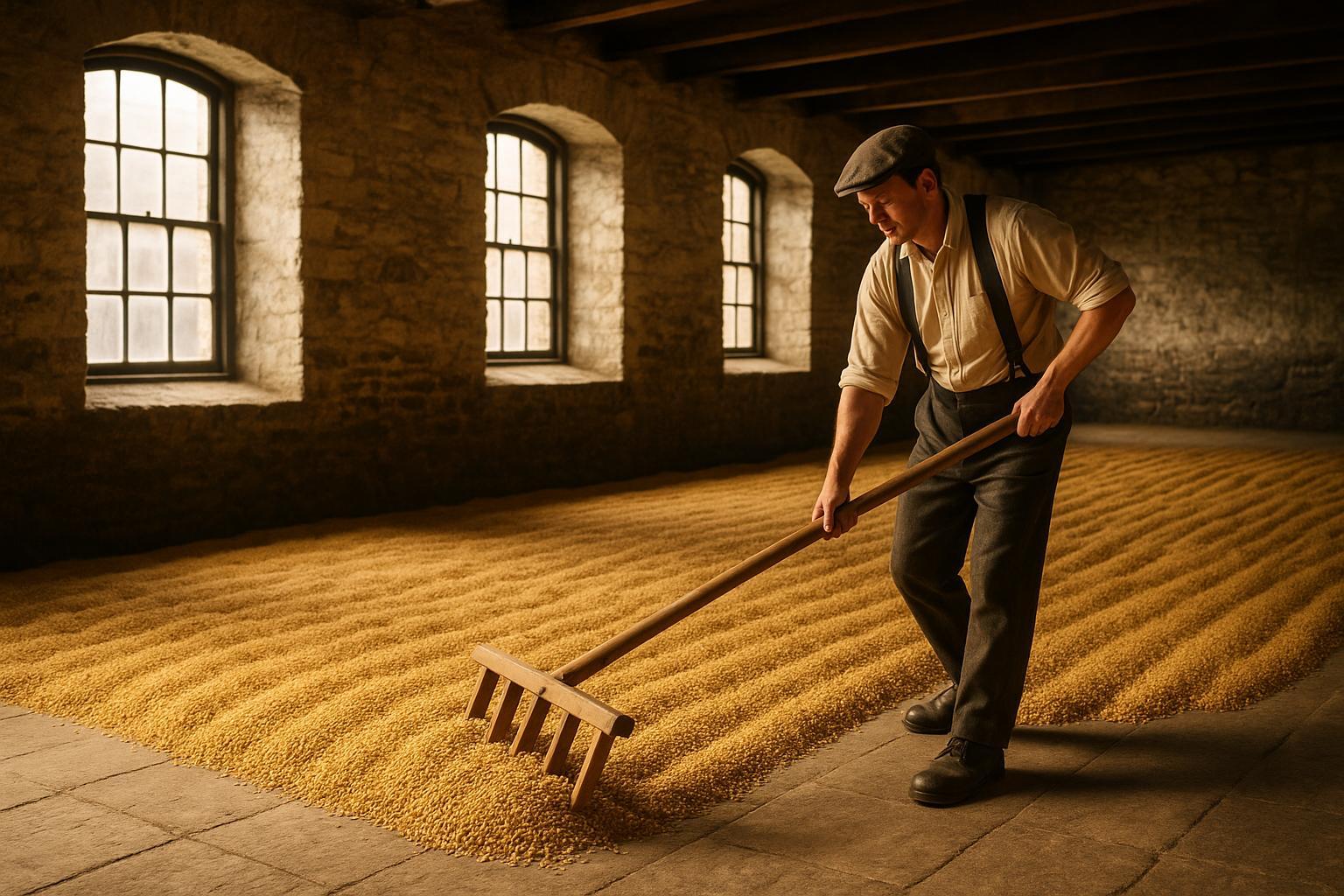
Soaking the Grain
The barley is first soaked in water for several days. This raises moisture levels and encourages the grain to begin germinating.
Germination
Once the barley starts to sprout, enzymes inside the grain activate. These enzymes convert stored starches into fermentable sugars.
The grain is regularly turned to prevent overheating and ensure even germination.
Kilning
At the right moment, germination is stopped by drying the grain in a kiln.
Some distilleries burn peat during drying, allowing smoke to pass through the grain. This creates the smoky aromas associated with certain Scotch whiskies.
The level of peat smoke can vary dramatically:
- Lightly peated whiskies have subtle earthy notes
- Heavily peated whiskies can taste intensely smoky and medicinal
Step 2: Milling and Mashing
After malting, the grain is ground into a coarse powder called grist.
The grist contains:
- Husks
- Grits
- Flour
Maintaining the correct balance is important because it affects sugar extraction during mashing.
Mashing
The grist is transferred into a large vessel called a mash tun, where it is mixed with hot water.
The heat activates enzymes that break down remaining starches into sugars.
Typically, several rounds of hot water are used:
- The first extracts the richest sugars
- Later washes remove remaining sugars
The resulting sugary liquid is called wort.
At this point, the process strongly resembles beer brewing. In fact, whisky production and brewing share many early-stage similarities.
The leftover grain solids are often recycled as animal feed, helping reduce waste.
Step 3: Fermentation
The wort is cooled and pumped into large containers called washbacks.
Yeast is then added to begin fermentation.
What Happens During Fermentation?
During fermentation:
- Yeast consumes sugars
- Alcohol is produced
- Heat is generated
- New flavor compounds develop
Fermentation can last anywhere from two to five days depending on the distillery’s methods.
Longer fermentations often create fruitier and more complex flavors.
Flavor Development
Many people assume distillation creates most whisky flavors, but fermentation also plays a huge role.
During this stage, compounds known as esters form and contribute flavors that may resemble:
- Apples
- Bananas
- Pears
- Tropical fruit
By the end of fermentation, the liquid — known as wash — resembles a strong beer with an alcohol content of around 7–10%.
Step 4: Distillation
Distillation concentrates alcohol and refines flavor.
The wash is heated in stills, causing alcohol to evaporate before water because alcohol has a lower boiling point.
The vapors travel upward before being cooled and condensed back into liquid form.
Pot Stills vs Column Stills
Pot Stills
Traditional copper pot stills are widely used in Scotland and Ireland.
Pot stills are often associated with:
- Richer flavors
- Heavier textures
- More artisanal production
The shape and size of the still can influence flavor significantly.
Tall stills may create lighter spirits, while shorter stills often produce heavier, oilier whiskies.
Column Stills
Column stills allow continuous distillation and are commonly used in bourbon and grain whisky production.
They are:
- Faster
- More efficient
- Better suited to large-scale production
Column stills usually create cleaner and lighter spirits.
Heads, Hearts, and Tails
Distillers divide the spirit into three parts during distillation:
Heads
Contain harsh chemicals and undesirable compounds.
Hearts
The smooth and flavorful center cut used for maturation.
Tails
Contain heavier compounds that can affect flavor negatively.
Making the correct “cut” between these sections is one of the most important skills a distiller possesses.
Step 5: Maturation (Aging)
Freshly distilled spirit is clear and fiery. It only becomes whisky after aging in oak barrels.
In many countries, whisky must legally mature for a minimum number of years before it can be sold.
For example:
- Scotch whisky must age at least three years
- Straight bourbon must age at least two years
Why Oak Barrels Matter
Oak barrels dramatically influence whisky flavor.
As the spirit ages, it extracts compounds from the wood that create flavors such as:
- Vanilla
- Coconut
- Caramel
- Cinnamon
- Clove
- Toasted nuts
Oak also softens harsh alcohol notes over time.
Barrel Types
Different casks create different flavors.
Ex-Bourbon Barrels
Often contribute vanilla and honey notes.
Sherry Casks
Can add dried fruit, spice, and rich sweetness.
Wine Casks
May provide berry and tannin characteristics.
New Charred Oak
Used heavily in bourbon production, creating strong caramel and smoky wood flavors.
The Angel’s Share
As whisky ages, some liquid evaporates through the barrel wood.
This evaporation is called the angel’s share.
In warmer climates, evaporation happens faster, which can accelerate maturation but also reduce barrel contents more quickly.
Climate and Warehousing
The environment where whisky ages has a major effect on flavor.
Cooler climates like Scotland create slower maturation and subtle complexity.
Hotter climates such as Kentucky or Texas increase interaction between spirit and wood, often producing bolder flavors in less time.
Warehouse design also matters:
- Humid warehouses affect alcohol evaporation
- Dry warehouses change water evaporation rates
- Temperature swings influence wood expansion
Step 6: Blending and Bottling
After maturation, whisky may be bottled directly or blended with other whiskies.
Blending
Blending is highly skilled work that aims to create balance and consistency.
Single Malt Whisky
Made from malted barley at one distillery.
Blended Whisky
Combines multiple whiskies to achieve a specific flavor profile.
Many of the world’s best-selling whiskies are blends because they offer reliable flavor year after year.
Dilution and Filtration
Before bottling, distilleries often reduce alcohol strength using water.
Some whiskies are also chill-filtered to remove fatty compounds that may create cloudiness.
Others are bottled:
- Non-chill filtered
- At cask strength
- With natural color
These styles are often popular among whisky enthusiasts seeking a more natural presentation.
Different Types of Whisky Around the World
Whisky traditions differ widely between countries.
Scotch Whisky
Scotch whisky
Known for:
- Regional diversity
- Peated expressions
- Long aging traditions
Major Scotch regions include:
- Islay
- Speyside
- Highlands
- Lowlands
Irish Whiskey
Irish whiskey
Typically smoother and lighter due to triple distillation.
Common flavor notes include:
- Honey
- Fruit
- Vanilla
Bourbon
Bourbon whiskey
Made primarily from corn and aged in new charred oak barrels.
Known for:
- Sweetness
- Vanilla
- Caramel richness
Rye Whiskey
Rye whiskey
Offers bold and spicy flavors with peppery complexity.
Japanese Whisky
Japanese whisky
Inspired by Scotch production methods but often focused on elegance and balance.
Common Myths About Whisky
“Older Whisky Is Always Better”
Age can improve whisky, but older does not automatically mean better. Some whiskies peak at younger ages while others benefit from long maturation.
“Whisky Gets Better in the Bottle”
Unlike wine, whisky does not continue aging once bottled.
“All Whisky Is Smoky”
Many whiskies contain no smoky flavors at all. Smoke usually comes from peat used during malting.
“Expensive Whisky Always Tastes Better”
Price can reflect rarity, age, or branding — but taste is subjective.
Conclusion
Whisky making is a remarkable combination of science, tradition, patience, and creativity. Every stage — from selecting grains to aging in oak barrels — contributes to the spirit’s final character.
What begins as simple grain and water eventually becomes a complex drink filled with layers of flavor shaped by fermentation, distillation, wood, climate, and time itself.
Whether you enjoy smoky Scotch, sweet bourbon, spicy rye, or delicate Japanese whisky, every bottle tells a story of craftsmanship and history.
The next time you pour a glass of whisky, take a moment to appreciate the years of work behind every sip.