Introduction: Does the Right Whisky Glass Really Matter?
Among casual drinkers, a whisky glass is often seen as little more than a vessel. Among enthusiasts, distillers, and master blenders, however, the choice of glassware is considered an essential part of the whisky tasting experience. The shape of a whisky glass can dramatically influence aroma concentration, flavour perception, and even the balance of alcohol on the nose.
Whether you are enjoying a smoky Islay single malt, a delicate Speyside Scotch, or a rich bourbon, the right glass can elevate every aspect of the dram. This guide to whisky glassware explains the most popular types of whisky glasses, explores how whisky glass shape affects flavour, and helps you choose the best whisky glass for your personal tasting style.
Why Whisky Glass Shape Affects Taste and Aroma
One of the most common questions among beginners is: does glass shape affect whisky taste? The answer is unquestionably yes.
A whisky’s flavour is driven heavily by aroma. Much of what we perceive while drinking actually comes from volatile aromatic compounds reaching the nose. The design of a whisky tasting glass determines how those aromas are concentrated, softened, or dispersed.
A wider bowl allows the whisky to breathe and release aromas, while a narrower rim channels those aromas toward the nose. Some glasses are specifically designed to reduce harsh alcohol vapours, helping subtler flavours emerge more clearly.
This is why professional tasters, distillers, and whisky experts rarely use ordinary tumblers during formal tastings.
The Tumbler: The Classic Whisky Glass
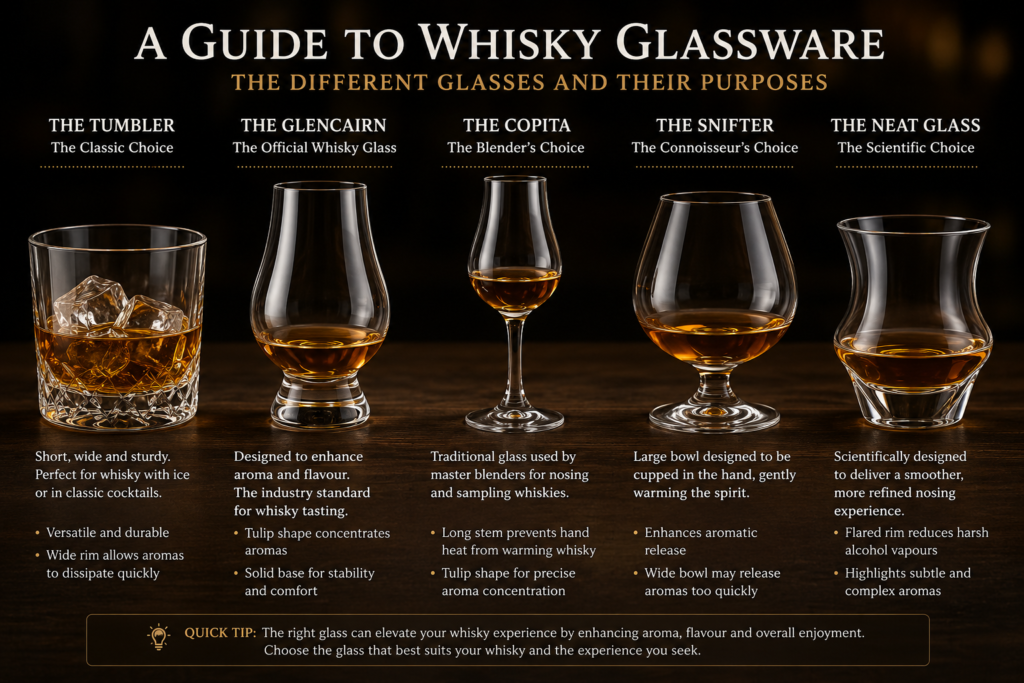
The tumbler — also known as the rocks glass or Old Fashioned glass — is the most recognisable whisky glass in the world. Its short, sturdy design and thick base make it ideal for casual drinking, whisky cocktails, and serving whisky over ice.
For many drinkers, the tumbler represents tradition and simplicity. It is durable, comfortable to hold, and perfectly suited to relaxed social drinking.
However, when compared with dedicated whisky tasting glasses, the tumbler has limitations. Its wide brim allows aromas to escape quickly, reducing the ability to detect the layered notes found in premium single malt Scotch whisky.
If your priority is aroma and flavour analysis, the tumbler is not usually considered the best glass for whisky tasting. If your priority is comfort and versatility, it remains a timeless choice.
The Glencairn Glass: The Best Whisky Glass for Tasting
The Glencairn Crystal Glencairn glass has become the modern standard for whisky appreciation and is widely regarded as the best whisky glass for single malt Scotch.
Developed specifically for whisky tasting, the Glencairn combines elegance with functional sensory design:
- The wide bowl allows the whisky to breathe fully
- The tapered rim concentrates aromas toward the nose
- The solid base provides comfort and stability
This tulip-shaped design helps reveal complex notes such as smoke, vanilla, dried fruit, spice, oak, and maritime character with impressive clarity.
Because of its balance between practicality and precision, the Glencairn is now used extensively at distilleries, whisky festivals, tasting events, and professional competitions worldwide.
For many enthusiasts wondering whether a Glencairn glass makes a difference, the answer becomes obvious after a side-by-side comparison with a standard tumbler.
The Copita: The Professional Blender’s Choice
The copita is one of the oldest and most respected whisky nosing glasses in the spirits industry. Originally inspired by traditional Spanish sherry tasting glasses, it remains a favourite among master blenders and distillery professionals.
Its long stem prevents the warmth of the hand from affecting the whisky’s temperature, while its narrow tulip bowl concentrates aromas with remarkable precision.
Compared with the Glencairn, the copita often feels more technical and analytical. It excels during professional whisky tastings where subtle differences between samples must be identified accurately.
For serious enthusiasts interested in whisky nosing techniques and sensory evaluation, the copita offers one of the purest tasting experiences available.
The Snifter: A Rich and Aromatic Experience
The snifter — sometimes called the brandy bowl or balloon glass — is associated with luxury, ceremony, and slow appreciation. Its large bowl and short stem encourage the drinker to cradle the glass gently, warming the whisky and intensifying aromatic release.
This style of glass works particularly well with older whiskies, rich sherried expressions, and full-bodied bourbons where deeper aromas such as caramel, dried fruit, oak, and baking spice can flourish.
However, some whisky enthusiasts argue that the wide bowl allows alcohol vapours to dominate more delicate aromas. While the snifter creates a dramatic and immersive experience, it may not provide the same level of precision as a Glencairn or copita during detailed tastings.
The NEAT Glass: The Scientific Approach to Whisky Tasting
The NEAT glass — short for Naturally Engineered Aroma Technology — represents a more scientific evolution in whisky glassware.
Unlike traditional tulip-shaped whisky tasting glasses, the NEAT glass is specifically engineered to separate ethanol vapours from desirable aromatic compounds. Its unusual flared rim helps soften the harshness of alcohol on the nose, allowing hidden aromas to become easier to detect.
This makes the NEAT glass particularly appealing for high-proof whiskies and cask-strength expressions, where alcohol intensity can otherwise overpower subtler flavours.
Among modern whisky enthusiasts, the NEAT glass has developed a strong reputation for enhancing aroma clarity while reducing sensory fatigue.
Glencairn vs Tumbler: Which Whisky Glass Is Best?
One of the most searched whisky questions online is: Glencairn vs tumbler — which is better?
The answer depends entirely on the experience you want:
| Whisky Glass | Best For | Strengths |
| Tumbler | Casual drinking & cocktails | Comfortable, durable, traditional |
| Glencairn | Whisky tasting & nosing | Excellent aroma concentration |
| Copita | Professional analysis | Precision nosing |
| Snifter | Rich aged whiskies | Enhanced aromatic warmth |
| NEAT Glass | High-proof whisky | Reduced alcohol harshness |
For beginners seeking one versatile option, the Glencairn is often considered the best overall whisky glass due to its balance of accessibility, aroma performance, and practicality.
How to Choose the Best Whisky Glass for You
Choosing the right whisky glass ultimately comes down to personal preference and drinking style.
If you enjoy whisky casually with ice or cocktails, a tumbler may be perfect. If you want to explore aroma, flavour complexity, and whisky appreciation more deeply, a Glencairn or copita is likely the better choice.
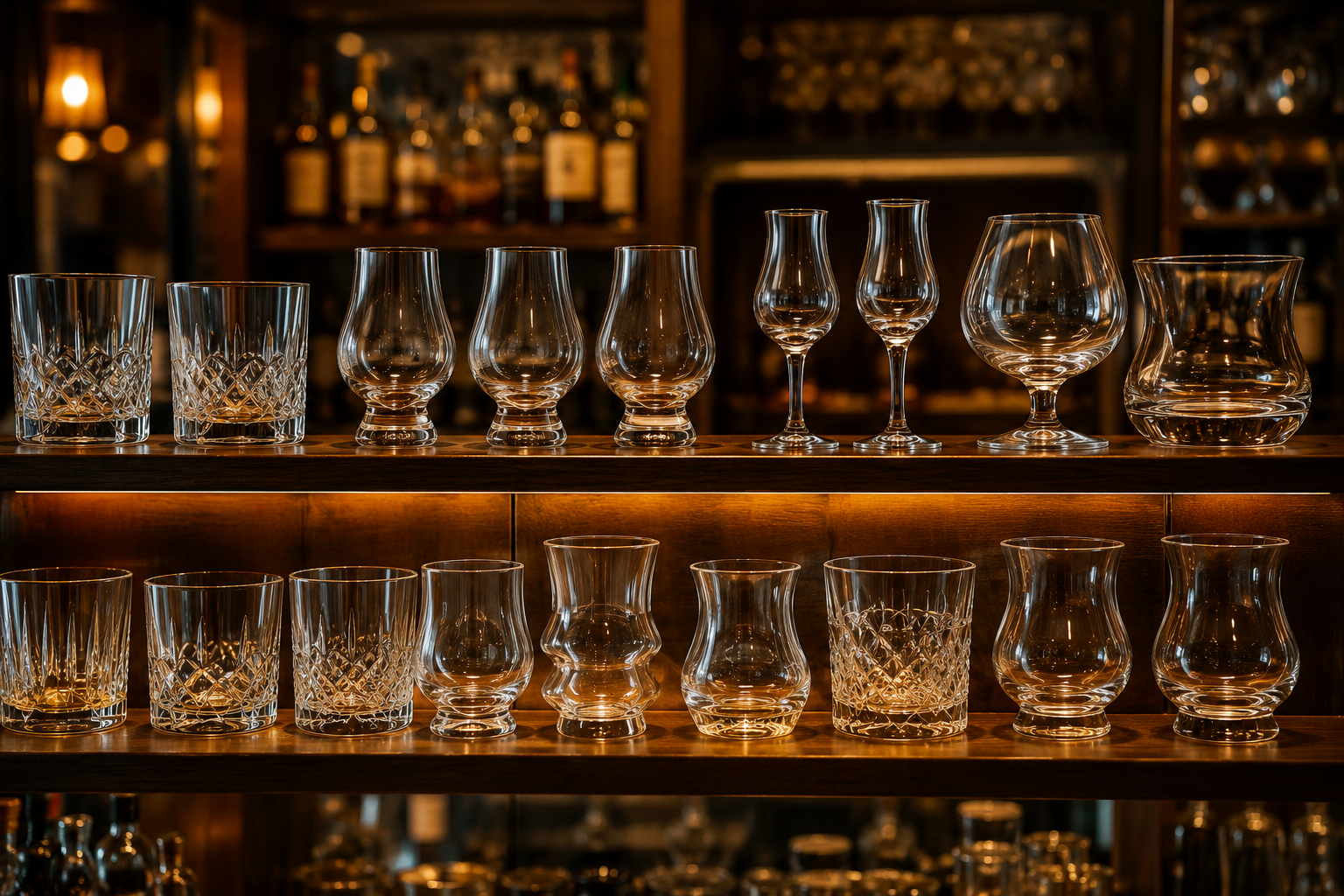
Collectors and enthusiasts often keep multiple styles of whisky glasses at home, selecting different vessels depending on the whisky itself and the occasion.
The important thing is understanding that glassware is not merely decorative. The right whisky glass can shape the entire sensory experience, revealing dimensions of flavour and aroma that might otherwise remain hidden.
Conclusion
The world of whisky glassware is far more sophisticated than it first appears. From the timeless tumbler to the precision-engineered NEAT glass, each design reflects a different philosophy of whisky appreciation.
Understanding how whisky glass shape affects flavour allows drinkers to experience whisky with greater depth, clarity, and intention. Whether you are a beginner searching for the best whisky glass or an enthusiast refining your tasting ritual, choosing the right vessel is one of the simplest ways to enhance every dram.
In whisky, details matter — and sometimes the journey begins with the glass in your hand.